


UPDATE – PEI Site Assessors Course rescheduled for June

Featured


Engineering Technologies Canada Ltd. presents: Soils & Site Assessments for On-site Sewage Disposal Systems

  • Test your knowledge by taking a short and anonymous pre-course quiz!
  • The course planned for May 13-15 has been rescheduled to June
  • All applicants are asked to re-register for the proposed new date in June.
  • Course will date will be re-confirmed once registrations are in.
  • Register to confirm your interest and ensure the course will go ahead.

Site assessor course

Learning Objectives:

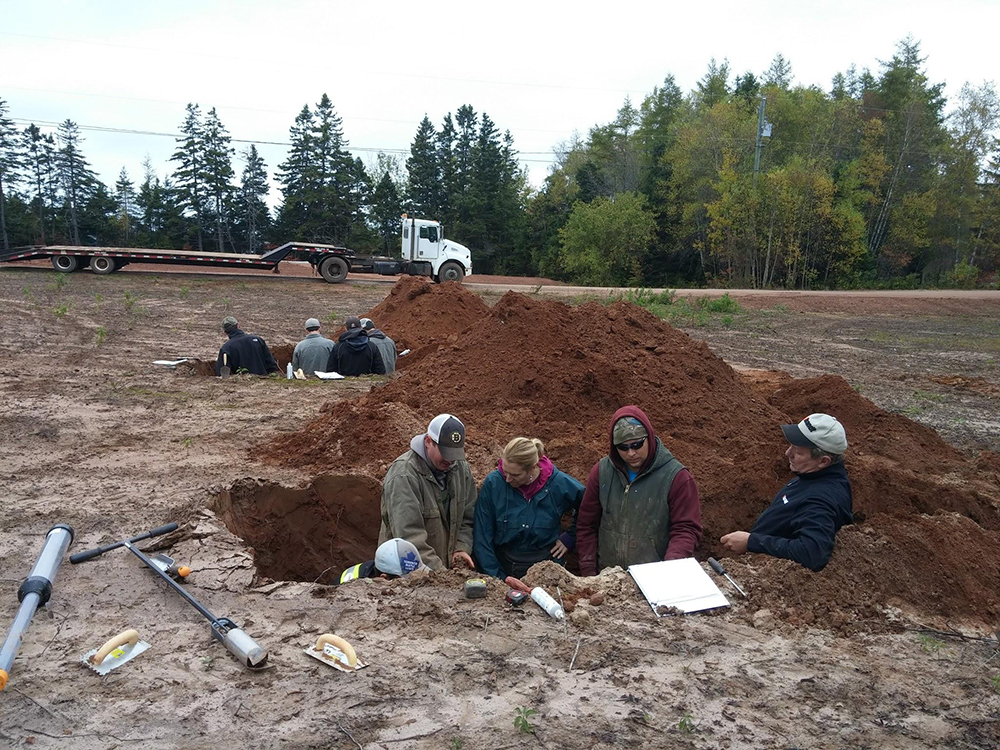
  • Proper test-pit techniques
  • Determining soil texture, structure according to the Canadian System of Soil Classification
  • Identify high groundwater tables
  • Identify bedrock
  • In-situ permeability testing
  • Determine PEI Soil CategoryRibbon test
  • Determine appropriate disposal fields
  • Determine when fill is required and how much
  • Course attendees who pass the exam may qualify for a Site Assessor’s License from the PEI Department of Environment.

WHEN: Possible rescheduled date of June 3-5, 2013 (with rain dates of June 6-7) Continue reading

Engineering Technician/Technologist (AutoCad, GIS, Soils) HRDC Job Bank # 7016134


Engineering Technologies Canada Ltd. has an immediate opening for a Junior to Intermediate Engineering Technician/Technologist within our Consulting Engineering Division located in the Stratford Business Park, Stratford, PEI.

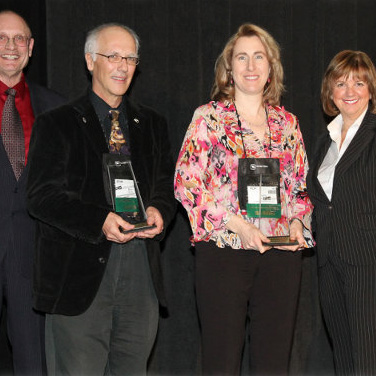
This diverse position offers the opportunity to join an award-winning engineering firm known for its innovative solutions to rural water and wastewater challenges. In this role you will be involved in many different areas of civil and geo-environmental engineering, and enjoy significant variety in your daily routine.

Working closely with the President/Senior Civil Engineer, you will provide technical, design support and construction phase services in several areas including:

  • soil and site assessments for subdivision approvals and decentralized (on-site) sewage systems,
  • on-site and cluster sewage system design (commercial, industrial, recreational and residential),
  • community water and wastewater servicing studies
  • wastewater servicing feasiblity studies
  • alternative sewer collection (eg. STEG, STEP) design
  • innovative/alternative wastewater treatment system design
  • land-based effluent dispersal system design.

Significant experience and proficiency with AutoCad is a must, and experience with GIS software is a definite asset.

Continue reading

PEI Department of Environment – (UPDATED) regulations regarding septic licensing


This is our understanding of the current policies regarding the various licenses issued by the PEI Dept. of Environment related to on-site sewage disposal.

In summary, the Department issues site assesors licenses ($250), septic contractors licenses ($250) and septic installers licenses ($25).

The septic contractors license ($250) is generally issued to the owner of a company. Only the contractor can select a system from the guideline document. He can not design a system. Only Engineers can design a system. To obtain a contractors license you must have a site assessors license (see below) and a pass mark on the Department’s contractor’s license exam. License is good for 2 years and is to be renewed on April 1 of the year it is due. It is also required to attend a meeting/seminar at least once in the two year period.

An installers license ($25) is issued to an employee of the company (someone who has the knowledge of how to install a system but has not written an exam). Essentially he/she is just an employee of the company and is registered with the Department as an installer. He must also attend one of the PEI Department of Environment’s seminar/meetings once every two years to be qualified. License is good for 2 years and is to be renewed on April 1 of the year it is due.

New applicants for a site assessors license ($250) must have two years of post Test pit with seepage_300dpisecondary education in a related field, and take a course on soils and site assessments that is acceptable to the Department, and pass the course exam. Pass mark is determined in consultation with the Department. The license is good for 2 years and is to be renewed on April 1 of the year it is due.


UPDATE (April 25, 2013): We recently received the following updated information on the department’s requirements for a Site Assessor’s license.

Section 5(3) of the new regulations states that the Minister may grant a site assessors license to an applicant without post secondary education, if the applicant has practical work experience in a related field and meets the requirements of section 5(2). A review of each applicant’s experience would be performed by the Minister on a case-by-case basis to see if they would qualify.

The Department currently does not have a course in place for contractors or installers and has no plans to do any training. In the past an applicant would challenge the exam they have on file and if they passed, the department issued a license. That has changed because new contractor’s licenses will only be issued to a person already holding a site assesors license.


Pre-course Quiz for PEI Site Assessor Course


Soils & On-Site Sewage Assessments - Pre-course Quiz

Test your knowledge of soils and on-site sewage assessments by taking this short multiple choice quiz. Your identity and score are completely private.

To learn more about soils and site assessments as they related to septic systems on PEI, register for our upcoming course on Soils & Site Assessments for On-site Sewage Disposal Systems

Victoria Water & Wastewater Project – Village of Victoria, PE

Gallery

This gallery contains 7 photos.

  Download the Victoria Water & Wastewater Project project profile in PDF format. The Village of Victoria, PE is a quaint, rural village and picturesque tourist destination with many period buildings, artisans, restaurants and a bustling waterfront. Residential lots were … Continue reading

Villa Sur Plage Condominiums – Robichaud, NB


Villa_Sur_Plage

View the PDF version here.

Villa Sur Plage Condominiums
Robichaud, New Brunswick
Client: Les Entreprises Mapoma Ltée

Engineering Technologies Canada Ltd. (ETC) designed the first private cluster
sewage system in New Brunswick to be managed by a condominium corporation.
The system includes:

Alternative Collection System -
Septic Tank Effluent Gravity Sewer
● Innovative Sewage Treatment System -
Recirculating Textile Packed-bed Filter.
● 100 mm HDDE Outfall to Northumberland Strait

The Hopewell Rocks Provincial Park – Hopewell Cape, NB


Hopewell_Rocks

On the rugged coast of Southern New Brunswick overlooking the Bay of Fundy, the majestic Hopewell Rocks attract more than 200,000 visitors annually. They come to stand in awe of the towering rock formations created by the natural forces of erosion and the highest tides in the world. A new Tidal Exploration Centre had been built with an Interpretive Centre, a 120 seat full service restaurant and public washroom facilities for the over 4000 people per day who visit the site. However, when the new Centre opened in the Summer of 1998, an acceptable means of managing wastewater had still not been found and Park operators had to truck thousands of gallons of sewage off the site every day.

Engineering Technologies Canada Ltd. (ETC) was retained to find an appropriate and affordable wastewater management solution that would be acceptable to Provincial regulators. Criteria for the on-site sewage system were as follows:

Zero discharge of effluent to the Bay of Fundy;
● Minimize impact on the site, no additional tree clearing;
● Should not require highly skilled operators;
● Modular, easy to expand

ETC recommended and designed a Recirculating Sand Filter (RSF) to treat the wastewater to advanced secondary levels. Fractional horsepower effluent pumps micro-dose an open filter bed constructed of coarse sand. The treatment process is extremely low rate and very stable. When properly operated and maintained,
the sand should never need to be replaced. The proven RSF system was the first of its kind in New Brunswick.

Achieving a zero discharge system for the treated effluent would also prove to be a challenge as the site was overlain with less than 1 metre of glacial till soil on top of massive, conglomerate bedrock. A Subsurface Drip Irrigation(SDI) system was designed to maximize the ability of the site to absorb the crystal clear effluent from the RSF. The specialized drip tubing was buried 150 mm below the ground surface which avoided problems caused by hazardous aerosol sprays. Effluent is applied in small regular doses, 24 hours per day, which optimizes its uptake by the mature trees, vegetation and biologically active rootmat layer.

The SDI effluent dispersal system was the first such system in Canada. The Park’s regular maintenance staff operate and maintain both the RSF and SDI systems without the need for additional highly skilled operators. SERCO was the recipient of several national and international awards for environmental achievement. They credit these awards in part to their environmentally friendly, sewage treatment and effluent dispersal systems.


Engineered Septic System Elementary School – Donagh, PE


Donagh_School

Engineered Septic System Elementary School, Donagh, PEI
Client: PEI Dept. Transportation and Public Works

Engineering Technologies Canada Ltd. (ETC) has developed and refined a state-of-the-art, pressurized HDPE Leaching Chamber septic system design.
Each system is customized to suit the specific soil, rock, groundwater conditions and topography so that it blends into the existing landscape.
The ease with which the system can be expanded is made possible through the use of an innovative Distributing Valve first introduced to the Maritimes by ETC engineers. Inspection and Maintenance Ports ensure the system is easy to monitor and maintain.
This system has provided cost effective on-site sewage treatment and disposal for numerous commercial, recreational and institutional developments such as this new school in Donagh,PEI.

Brudenell Fairway Chalets – Roseneath, PE


Brudenell-Fairway

The Brudenell Fairway Chalets are located in Roseneath, Prince Edward Island. This rural development provides some of the most beautiful lodgings on PEI and required a practical, low maintenance and cost effective sewer servicing solution. The wastewater collection and treatment system is composed of three components: a septic tank effluent gravity (STEG) sewer, a mainline effluent pumping station and a pressurized HDPE leaching chamber disposal field. The most significant feature of the effluent sewer is that septic tanks provide primary treatment upstream of each connection. The effluent sewer was less expensive, easier to install and is less prone to infiltration than conventional sewers. The collection sewer drains into an effluent pumping station. Septic tank effluent is pressure dosed to an HDPE InfiltratorTM Leaching Chamber Disposal Field centrally located in a recreational area. The disposal field was designed as three separate zones. Each zone is dosed intermittently and sequentially using a
mechanical distributing value.This innovative value also makes it easy to expand the
disposal field in the future by installing additional zones.

Sewage Treatment and Effluent Dispersal System – Cape Jourimain Nature Centre Bayfield, NB


Cape_Jourimain

A new Provincial Visitor Information Centre, an Interpretive Centre and a Restaurant have been constructed at the 675 hectare Cape Jourimain National Wildlife Area in New Brunswick. The site is open to the roughly 1.5 million people who travel to Prince Edward Island via the Confederation Bridge each year. Sand dunes,saltwater marshes, beaches and forested uplands are part of this diverse and beautiful ecosystem which is on a major migratory flight path for hundreds of bird species.

Unfortunately, the site is also characterized by a flat topography, dense clayey, glacial till soils, and a high groundwater table (see photo on left). To address the adverse site conditions, conventional on-site sewage systems would have required either large scale tree clearing or a direct discharge; neither of which were suitable options for the client. Engineering Technologies Canada Ltd. (ETC) was assigned the challenge of designing and implementing an acceptable wastewater management strategy to protect this ecologically sensitive site.

To significantly reduce the volume of sewage water to be managed, the Clivus MultrumTM composting system was selected to naturally treat all black toilet wastes. The high-strength, concentrated wastewater from the kitchen of the full service restaurant is treated to advanced secondary levels using the Canadian, Waterloo Biofilter® sewage treatment system.
The Biofilter is a recirculating trickle filter that uses highly absorbent, plastic foam to treat wastewater. This was the first commercial Waterloo Biofilter installation in Atlantic Canada.

After much research into effluent dispersal options, ETC designed an innovative subsurface drip irrigation, pressurized, at-grade, wood chip (SDI-PAW) system to disperse the crystal clear effluent into a treed area. Polyethylene drip tubing was laid down on the ground surface and covered with a thick layer of coarse, cedar wood chips. Apart from minor removal of low brush, no clearing or cutting of mature trees was required to accommodate the effluent dispersal system. The flexible SDI-PAW drip lines were designed to wind around and in between the trees which are valued for the considerable amount of effluent water they can take up through transpiration.

To facilitate regulatory approval of the unique effluent dispersal system, ETC designed and carried out a stateof-the-art, full scale hydrogeologic loading test to evaluate the capacity of the site to accept the treated effluent. An on-site potable well was used to dose the full size SDI-PAW system with increasing volumes of fresh water over a period of two months. The full scale test successfully demonstrated the ability of the site to
assimilate the projected design flow. The innovative testing program proved to be a highly effective tool to address the concerns of regulators and resulted in the timely receipt of the approvals and permits necessary for the project to proceed on schedule.

Since the site opened, effluent quality, ease of operation and general performance of the system have surpassed expectations. Tourists from all over North America have requested tours of the innovative and environmentally responsible waste management
systems.